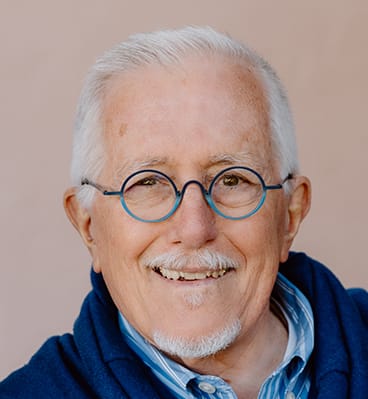
“You pulled your punches,” Karolina said, standing below the stage at the July 2014 EuViz conference where I was sitting along with three other “elders” in the field of visual facilitation. “I and some others felt like you didn’t really say what you thought. You are the founders of this field. You need to tell us what you really think.”
We were at the Hotel nhow in Berlin with 220 visual practitioners from 29 countries. The conference was a collaboration between the International Forum of Visual Practitioners (IFVP), now 19 years old, and Neuland and Kommunikationslotsen*. It was by far the biggest and most professional IFVP conference yet—beautifully organized and a powerful experience. Participants included the full range, from beginners in the field to longtime veterans and skilled practitioners.
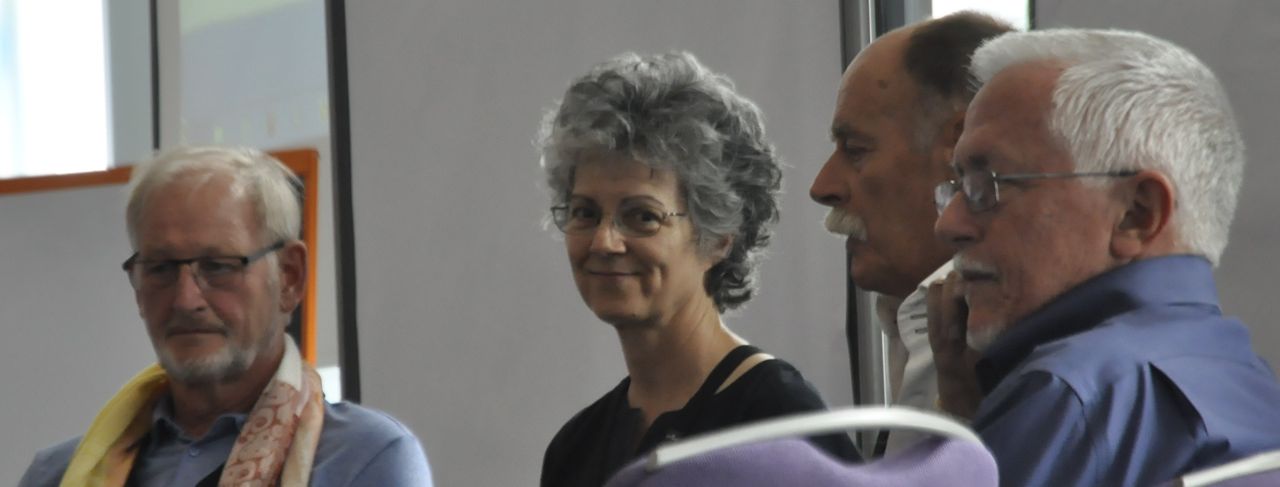
The panel of “elders” happened on day two. The four of us are longtime practitioners in the field. It included Ulric Rudebeck from Sweden, a skilled Strategic Visioning consultant and visual facilitator; Reinhard Kückenmüller, a former architect turned visual facilitator who invented a wonderful way of capturing the deeper emotions of a group on little cards with whimsical drawings and captions; and Lynn Carruthers, current President of IFVP and 20-year visualizer working with the Global Business Network in scenario planning.
As for me, a 42-year practitioner and author of the Visual Leadership series for Wiley & Sons, I felt that I was suited for the role. Yet Karolina’s challenge rocked me. We’d been sharing what we felt were our deepest insights about the value of this work, and what guided us—things like being driven by curiosity, deciding to share and lead rather than compete and defend, and appreciating the more subtle realms of feeling and awareness.
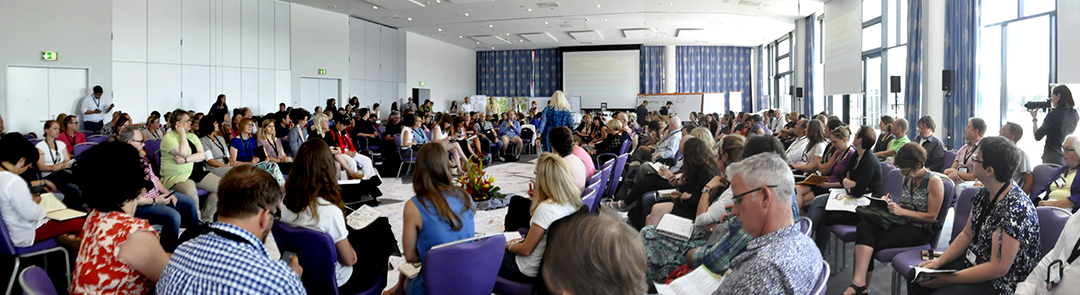
But Karolina is a product of the creative edge of Berlin. As a Polish-German, she is deeply involved in bringing forward a new vision of community and work in the Berlin context. She facilitates a 70,000 gathering every year that is a Berlin equivalent to Burning Man, where this community spends a week living into their vision of the future. She wanted the real deal from us. I thought we’d been providing it, but her plea prompted a deeper look.
After the group buzzed a little we had a chance to respond. I don’t have a transcript, but I’d like to share the essence of what I said.
I found myself saying that my perception was that the field was on the edge of a explosion of interest in this work, but was still very young at appreciating the real issues of being a third party professional (like mediators, arbitrators, and negotiators).
“I see a good number of people caught up in the surface of the information, in making beautiful charts, and I am concerned that we don’t understand the issues of power that go along with this work.” I was speaking to the insight of Adam Kahane, a pioneer in scenario planning, whose book, Power & Love, explores the fact that humans do have an innate desire to find connections with each other and experience community and love—the basis of much of the successful work with circles, scenarios, dialogue, and other practices that promote deep engagement and mutual appreciation. But many of these process run into the fact that groups also have to deal with power, which he defines as the natural desire of a living organism to express itself and grow. Talking about power is not easy, and we don’t have a developed understanding of how to engage it.
“Many visual facilitators and recorders underestimate the power of their pens and what it means to put down images and words for other people,” I said. As we are learning from new sciences like quantum physics, the mere act of observing collapses probabilities at the subatomic level—the level where consciousness operates—the level of light and energy fields. “What does it mean to project an interpretive image into the words of another? What choices or insights does it collapse?” I asked. I feel the field is very underdeveloped in thinking about this effect, and honoring its power.
“As facilitators we often are called in to balance out problems created by leaders who are personally erratic or insensitive,” I continued. I know that many people in HR are in co-dependent relationships with people who are consumed with money and power. “If we simply do our craft, and support the takers of the world, what are we creating? A bigger pile of BS?”
Having spent many years and hours working in Silicon Valley and for large multi-national organizations, I know that they are full of wonderful people trying their best to do good by doing well. And I know that the systems they work in are full of momentum and inertia that no one controls, driven by the need to exhibit short term, quarterly returns for financial markets. Many know this is a deep, structural problem, but on it goes.
Visual facilitators have taken a very undervalued role, the role of the secretary, and elevated it to a visible one. It’s easy to get intoxicated with the sudden launch into the spotlight. People LOVE the pictures. It’s an exciting role for many who find a way to be creative and expressive and make decent wages. And it’s easy to get very attached to the drawings and get wrapped up in one’s own personal identity and “brand.” It’s visual. It’s fun. It’s trendy. Yet it is a power that is easy to unconsciously misuse.
Discovering visual facilitation is a bit like discovering fire for the first time. It predictably ignites creativity, provokes engagement and interaction, provides a doorway to big picture/systems level thinking, and creates an artifact that helps the whole group remember. Like fire, this is a force to be reckoned with. The power of the pen has been respected throughout written history. We must respect it now and use it wisely.
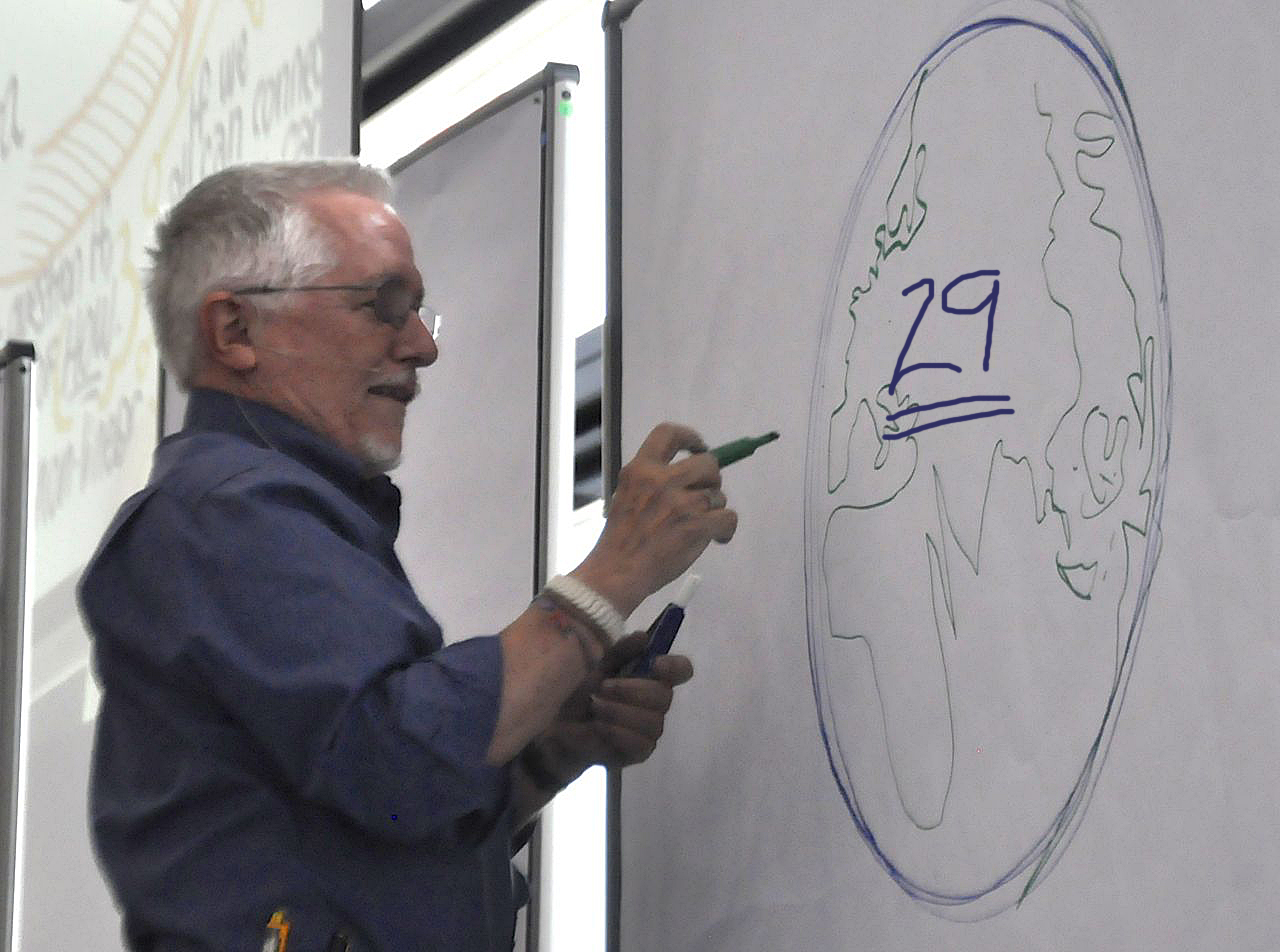
Then MC Mary Alice invited a final round of sharing to close the panel and I said I wanted to say one more thing, in the language of our practice. I stood and drew a quick map of the earth and recorded the number 29 in the middle, for the 29 countries represented at EuViz.
So I’d said my “elder’s” truth and shared my questions.
Afterward Karolina and many others were very excited that I had stepped out this way. I was excited to experience the power of being encouraged by a colleague to show up. There is a real, challenging world out there and we need to support each other in having the courage to face it. Many are ready to step up, but not to continue the patterns and behaviors that have produced so many unintended consequences. I know we need to understand and address power. I know we need to understand love. The good news is we have a chance to facilitate both in this field.
Visual listening, I’ve come to believe, is a kind of servant leadership. When one accepts being a vulnerable, public learner, curbs the desire to make quick projections about what people mean, avoids the trap of identification with the work, and lets display making be guided by the group and its deeper currents of meaning, then our craft becomes a practice, and an inspiring example of what it means to truly collaborate.
* Conference co-organizers Neuland and Kommunikationslotsen are both German firms—the first a leader in pens, pinboards and other tools for group work, and the second a firm that blends circle work, large group facilitation, and visualization in a successful consultancy focused on advancing collaborative practice.