I sustain a keen interest in metaphors and plausible narratives about where we are headed as a society, and frankly, I am worried. I was rocked recently by a close reading of sociobiologist and futurist Rebecca Costa’s
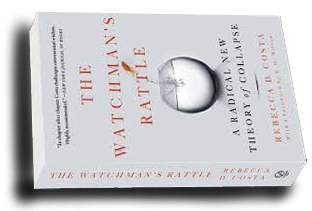
2012 best seller, The Watchman’s Rattle: A Radical New Theory of Collapse. (She has a new book, also a best seller, called On the Verge, which I haven’t read.) Costa has a long history in Silicon Valley and a polymath’s appetite for large-scale thinking. My reading, in the context of seeing our country spiraling into policy chaos, is that her 2012 message is even more relevant in 2018.
Her “new theory” is that civilizations collapse when complexity outstrips human’s cognitive ability to grasp what is going on. More interestingly, she identifies the symptoms that suggest collapse is beginning. I'm not wanting to believe we are collapsing, as I am much more interested in growth and development and what our field of process consulting and visual practice can do in response. Yet her argument is persuasive.
Let me summarize what she is talking about. Drawing from both evolutionary biology and new findings in neuroscience, Costa describes in detail how the Mayans, Romans, Germans and others expanded and collapsed. Collapse begins with gridlock—simply too many conflicting forces and events compounding—and continues with the substitution of belief for facts.
In most civilizations, Costa observes, there is a balance between untethered beliefs and scientifically or experientially validated knowledge. We use beliefs to deal with the ineffable and non-objective, and we have (at least for the last many hundreds of years) looked to science for help with being objective, particularly regarding the physical world. Yet when complexity begins to overwhelm people’s cognitive abilities, beliefs take over and attention to facts disappears.
For the Mayans facing severe drought, their engineering of cisterns and other water strategies gave way to human sacrifice. For the Germans after World War I, the complexity of their post-war fractured economy gave way to fascism and blame and World War II. Sound familiar?
Five Memes
As beliefs begin to supersede fact-based knowledge, some of these beliefs develop a viral power and become what Costa calls “super memes.” (Memes, as you may well know, are thought forms that propagate via human brains. They function a lot like viruses, jumping from host to host). Super memes become unquestioned frames of reference.
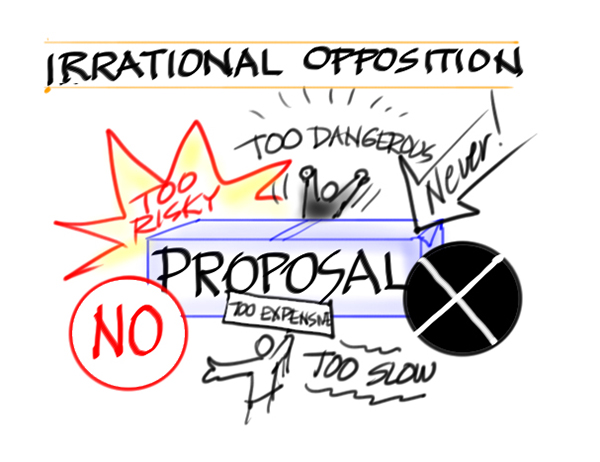
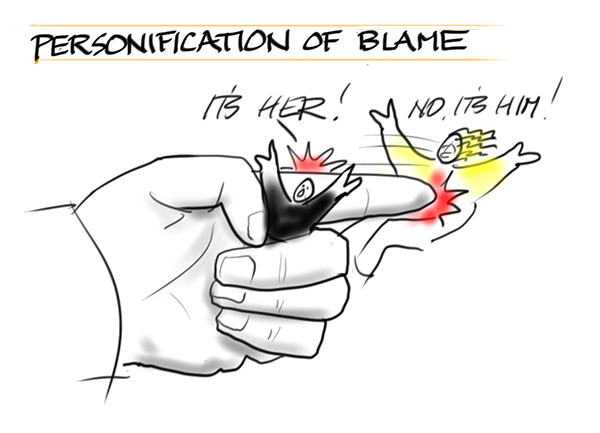
I created the following working illustrations of these five super memes to plant them in my memory:
- Irrational Opposition: It is okay or even virtuous to oppose things because you don’t like them, and you bear no responsibility for providing any possible alternate solution.
- Personification of Blame: When things aren’t working, blame individuals and ignore system dynamics and multiple causation—and definitely don’t spend time on research or actually trying to increase your understanding of the situation.
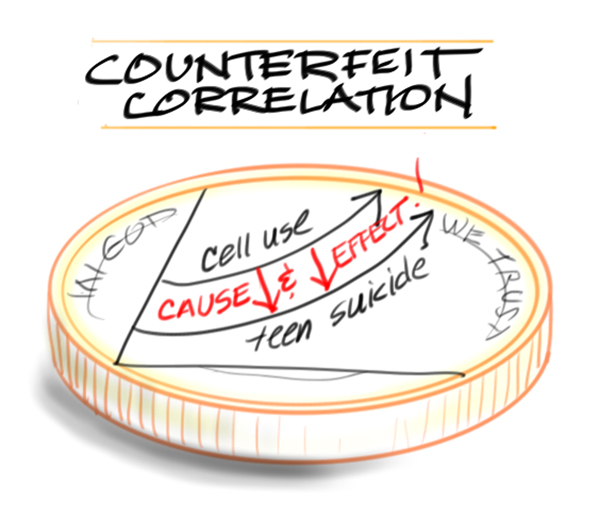
- Counterfeit Correlations: Forget real science; if two data streams follow a similar pattern, they must be causally related. For example: cell phone use by teens is increasing. Teen suicides are increasing. Therefore cell phones must cause suicide. While this is completely bogus science, it is pervasively passing as science in many quarters, according to Costa.
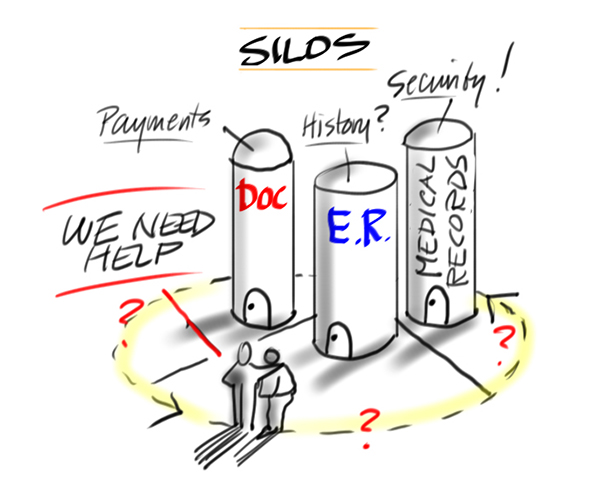
- Silos: It is to be expected that people will stay inside the comfort of their own discipline, function, and culture, not sharing with others—especially those who are different. Costa's most chilling examples are from the "health care" system.
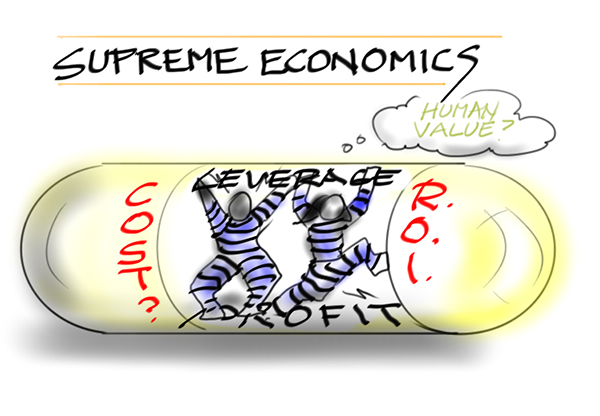
- Supreme Economics: The only true value is economic value: ROI, leverage, and profitability. Thinking of people as resources that have to be managed is practical and necessary. Caring about intrinsic human values is for people who aren’t realistic.
Looking and listening to the news through these lenses is sobering. How much reporting goes on that is outside these frames? How firmly are these "super memes" embedded in our institutions? How much of their increasing virility is being fueled by our social system becoming truly overwhelmed? Even more cynically, how much of the complexity, overwhelm, and confusion that seems to be growing is being purposely fostered to drive people to beliefs over facts? (Or am I now personifying blame?)
Hopeful Strategies
In the last part of her book Costa reviews strategies for increasing cognitive capability as a potential response, perhaps hanging on to the modernist dream that thought will prevail, and tiptoeing into the role of insight (as opposed to either logical or analogical thinking) and the domain of mindfulness strategies as ways of finding deeper guidance.
Her conclusion—that collapse is connected to cognitive overload on a social scale—resonated with work I’ve been doing with Mary Gelinas, one of our GLEN (Global Learning & Exchange Network) colleagues, on the Neuropsychology of Collaboration. Mary appreciates that fear and threat neurologically shut down our executive function and interfere with our ability to innovate and problem-solve. We held a set of three GLEN Exchanges last month, and Mary wants to push ahead with a book on the subject. I have also worked with Bill Bancroft, another GLEN colleague who is digging deeply into the same areas. Bill led a couple of exchanges on the Neuropsychology of Design Thinking, exploring why being playful and exploratory is so helpful.
Costa’s ideas lend even more credence to the idea Gisela Wendling and I are bringing forward in Visual Consulting: Designing & Leading Change (now finished and due out in September)—that we need to pay as much attention our inner dynamics and capabilities as we do to outer support structures and technique when we are leading change.
I’d love to get responses to these ideas. I’m considering opening up a more serious exploration in The GLEN to do some real collective wisdom exercises around Costa’s central thesis, and I definitely will read her second book.
I pursue all these explorations being fascinated with cognition, and am beginning to think it might have some bearing on our survival. If increasing cognitive capability in people and groups is an important response to our global predicament, then there is a huge potential role for those of us who work as visual process consultants.